Showing posts with label Coral Sea. Show all posts

Wednesday, December 14, 2011

Modern Accommodation In Hamilton Island


Are you looking for "Modern Accommodation In Hamilton Island?"
I have found a great place for you and your family to stay.
Actually you can fit in up to 8 eight guests and best of all it is right next to the beach, Catseye beach to be precise.

Watch the video first then scroll down to find out more!


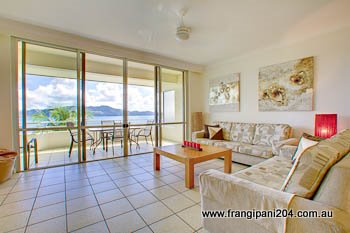
The apartment holds a top floor position so there are views right across the Coral Sea and the Whitsundays and yes, you can see the beach too!

This 3 bedroom apartment also comes with 3 bathrooms, no waiting for your turn and each room comes with its own TV and DVD player.


Now, I did leave one thing out! When you stay here you also get 2 golf buggies thrown in to get around the island in! What a great way to get around!

To find out more click the link provided Modern Accommodation In Hamilton Island
Enhanced by Zemanta

Saturday, November 5, 2011

Great Barrier Reef Marine Park Fun!

A scuba diver looking at a giant clam on the G...Image via WikipediaCAIRNS, AUSTRALIA - AUGUST 07:  Aerial views o...Image by Getty Images via @daylifeWelcome to my blog post "Great Barrier Reef Marine Park Fun"!
This place sure is natures wonderland and the Coral sea just may be the biggest on the planet!


Check out the video below if this true underwater paradise!

Exploring Oceans: Great Barrier Reef
The largest living structure, the Great Barrier Reef spans more than 1200 miles (2000 km) of islands and submerged reefs.


I also cam accross this wonderful article and wanted to share it with you all!
Enjoy!

Coral Sea could be world's largest marine park

LABOR is considering proposals to establish the world's largest marine protected area with 972,000 square kilometres of the Coral Sea to be given differing levels of environmental cover.

The Age believes the draft proposal for the tropical waters between the Great Barrier Reef and the edge of Australian territory will place about half the total region in ''no take'' reserves, stopping fishing.

The rest of the Coral Sea will be made multi-use, single-use and wilderness conservation areas allowing recreational fishing, some commercial fishing, or both, to differing degrees.

The draft proposal is still being finalised before its release in coming weeks, but falls short of a campaign by conservationists for the entire Coral Sea to be declared a ''no-take'' reserve due to its largely unspoilt environment and military significance.

Director of the Australian Marine Conservation Society Darren Kindleysides said: ''The government has the opportunity to leave an environmental legacy of global significance by fully protecting the Coral Sea in a large marine national park.

''There have always been two important goals since the campaign to protect the Coral Sea began in 2008 - providing a very large safe haven for marine life and recognising the historic significance of the area.

''We'll be assessing the plan to see how it measures up against these two key tests once it is released.''

Environment Minister Tony Burke would not comment yesterday except to say ''a draft bio-regional plan for the east region, including the Coral Sea, will be released later this year and will be followed by a three-month period of community consultation.''

But in an article in Fishing World last week, Mr Burke said he wanted to minimise the effects on recreational fishers from the rollout of marine parks around the country, including in the Coral Sea.

Mr Burke said he wanted no-take zones to be primarily located away from popular recreational fishing spots and that ''exclusive catch and release recreational fishing zones'' could also be used allowing extraction of fish only for immediate consumption.
View Original article here!

Recently I was reading about the impact of fishing on the Great Barrier Reef and the Coral Sea!
There really has been a large impact and many species are in lower numbers, as they are targeted as table fish.
Hopefully somehow they can get on top of this and do some serious studies on the impacts here!
Lets pray for sustainable fishing in this area!
Take care my friends and if you ever get a chance go and get some of your own Great Barrier Reef Marine park fun!
Happy Holidays
Marty
Enhanced by Zemanta

Monday, October 31, 2011

Perfect Condition for Coral Spawn on the Great Barrier Reef

A Barrier Reef Anemonefish (Amphiprion akindyn...Image via WikipediaPerfect Condition for Coral Spawn on the Great Barrier Reef!
Yes, November is the time of year, but will the conditions be just right?
Watch the video as Coral spawns on the GBR and check out the article below to find out more about this really cool event!

Blue Planet: Coral Sea: GBR - Coral Spawning


Coral phenomenon edges closer

The annual coral spawning on the Great Barrier Reef is set to occur in November as conditions become conducive to the natural phenomenon.

Conditions for spawning need to be just right; warm sea temperatures of 27 degrees Celsius, little tidal movement around three to six days after the November full moon, and after nightfall.

WATCH A VIDEO OF THE SPAWNING (above)

Poseidon's Peter Wright has been witnessing the spawning since the 1980s.

"It doesn't totally happen all in one night. It tends to happen on the inshore reefs a couple of nights beforehand and sometimes a whole month beforehand.

"A good indicator is Magnetic Island off Townsville. When that spawns you can be pretty sure (the reef in our area) will be soon after."

Mr Wright said the spawning will help the reef recover after natural disasters such as cyclones Larry and Yasi.

"It will help with the regeneration of damaged areas of the reef, providing those areas are clean of algae."

Marine biologists discovered the spawning process just 30 years ago, and this year predictions are being made that all will fall into place between 16 and 18 November.
View original article here

I hope you enjoyed this video blog post Perfect Condition for Coral Spawn on the Great Barrier Reef
It really is quite an amazing event and without this happening coral reef would cease to exist!
So, lets hope for a succesful spawn shall we!
If you enjoy me blog please pass it on to others for all to enjoy!
Happy Holidays
Marty
Enhanced by Zemanta

Saturday, October 29, 2011

Great Barrier Reef Tour with Quicksilver

Great Barrier Reef Snorkel Tour...off to find NemoImage by Miss Jo and the Elves via FlickrAre you looking for a "Great Barrier Reef Tour with Quicksilver"?
This company has been around for years now and provides a wonderful arrangement of tours.
I hear that they are also now doing a night cruise of some sort.
I have provide below for you an article and video all about this wonderful company and what you can expect in your next trip with the Quicksilver!

Quicksilver Cruises Great Barrier Reef Tours Port Douglas

The world's best known Outer Great Barrier Reef cruise experience. Quicksilver Cruises takes you to the renowned Agincourt Reef at the very outer edge of the Great Barrier Reef. Here, special reefs known as 'ribbons' run parallel to the Continental S...


With Quicksilver, an in-depth Great Barrier Reef tour

By Shane Nelson
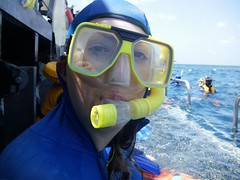
Great Barrier Reef from aboveForty-five miles due east of Australia's Cape Tribulation, I was awash in the Coral Sea's mounting crush and having second thoughts about touching a giant clam.

Only minutes earlier, I'd watched a snorkeling marine biologist from Quicksilver Cruises point out an open clam the size of a monster-truck tire. Before diving down to brush it gently with her fingers, she explained to a small group of us how Hollywood had helped falsely brand the sea creatures as man-eaters. A grudging, unhurried jerk followed, and the clam gradually closed its dazzling maw, concealing most of its velvety, electric-blue flesh within the corrugated confines of a far drabber shell.

The process looked simple enough, and shortly after the guided tour finished, I located a giant clam of my own and decided to get a closer look. Sucking in a series of hurried breaths -- hyperventilating apparently helps one go longer without taking a breath -- I bit down on my snorkel and plunged headlong into a canyon of pastels.

An undulating patchwork of muted colors from the surface, the reef became increasingly tangled and complex as I pulled myself closer, descending on the fragile metropolis of coral. Finally just a few inches from the biggest clam I'd ever seen and struggling some with that depth's pressure, I reached out to see what the shell of a wrongly accused man-eater felt like. I ended up stopping short, though, captivated by the colors. It looked like the clam had swallowed a gleaming swatch of green and blue leopard print, and I didn't want anything to do with closing up all that brilliance.

Far-out splendor

Clients who join one of Quicksilver's outer Great Barrier Reef excursions are in for quite a journey. The sailings depart from Port Douglas in northern Queensland and travel just over 45 miles to the edge of Australia's continental shelf and the marine preserve at Agincourt Reef. The trip takes about 90 minutes one way.

Agincourt ReefTalk with Doug Baird, a longtime marine biologist for Quicksilver and the company's environment and compliance manager, and he'll tell you the long voyage is well worth the time.

"If you visit an inshore reef, that may not have a great diversity of coral, and it may not have a tremendous amount of fish life, mainly because of its proximity to the mainland," he explained. "Whereas going with us out to the edge of the continental shelf, we can bank on [150-foot-plus] visibility just about all year round, and there's a tremendous diversity of corals and fish."

Covering a total area of more than 134,000 square miles, the Great Barrier Reef is roughly the same size as New Mexico, and perhaps not surprisingly, many of its most pristine regions are those farthest from where people live.

During our interview, Baird mentioned a range of factors that can be harmful to corals, including sediment runoff, water temperature, salinity fluctuations as well as a growing concern linked to global warming: ocean acidification.

"The more carbon dioxide the oceans absorb, the more acidic the ocean is going to get," he said. "Corals rely on being able to remove calcium carbonate from the surrounding water then lay that down as a skeleton. Calcium carbonate skeletons don't tend to live well in acidic conditions."

Despite those concerns, the Agincourt Reef preserve certainly appeared healthy during my recent visit, and the assortment of both corals and fish was phenomenal.

"It is a full day," said Alana Pietrzak, a Los Angeles-based marketing manager for Qantas Vacations, of Quicksilver's outer reef excursions. "But you get to fully experience the colors of the reef, and there's a far better chance to see all kinds of marine life out there."

Finding Nemo

Patient snorkeling isn't a strong suit of mine, and I'm frequently guilty of trying to see too much as soon as I get my fins wet. According to Baird, narrowing one's focus often yields better results.

Great Barrier Reef coral"What I find most interesting -- and what I try to get folks to do, as well -- is just to follow a fish and see what it does," he said. "See how that fish interacts. See what kind of distance it covers. See what it's feeding on. ... Some fish will spend their entire life cycle in an area not much bigger than a coffee table. Clown fish, for example, tend to spend almost their entire life on one anemone."

Baird told me that actually spotting a clown fish, however, can be tough even for the most patient observers.

"On the movie screen, Nemo looked 4 feet long," he said. "In reality, Nemo is about an inch or 2 inches long. ... And they're also pretty shy. When something creates a big, dark silhouette above them, most of the shy and retiring fish tend to take refuge."

Snorkeling is, of course, only one of many options folks can enjoy once they arrive at Quicksilver's expansive outer reef platform. Those not interested in swimming can join a tour of the region's coral formations on the company's semisubmersible vessel or simply look out the anchored platform's underwater viewing observatory at all kinds of fish -- or passing loved ones.

For an additional fee, patrons can take introductory scuba lessons or plan a certified dive, and Quicksilver also offers novices a helmet diving experience where participants walk along a reef platform in a viewing contraption made mostly of glass. And there's the premium helicopter adventure taking off from a nearby platform, enabling guests to admire the Great Barrier Reef's staggering scale and mesmerizing formations from high above.

"Being Australian, I'm always amazed when I go out to the reef," said Pietrzak, a native of Cairns, Australia, who told me she's gone on at least five Quicksilver cruises. "There's always something magical about being out there, and I learn something new every time I go."

Commissionable to agents, Quicksilver's seven-hour outer reef cruises cost $210 for adults and $107 for children and include a light breakfast and buffet lunch. The company also offers a $534 rate for families of two adults and two children.
View original article here

Visit www.quicksilver-cruises.com.

As you can see from the article above this company really provides one of the best tours on the Great Barrier Reef.
If you are interested all about the Great Barrier Reef, Hamilton Island and the Whitsunday please follow this blog to keep updated.
Happy Holidays!
Marty
Enhanced by Zemanta